-
What LRP Is and Why It Fails Quietly on Modern Vision Models
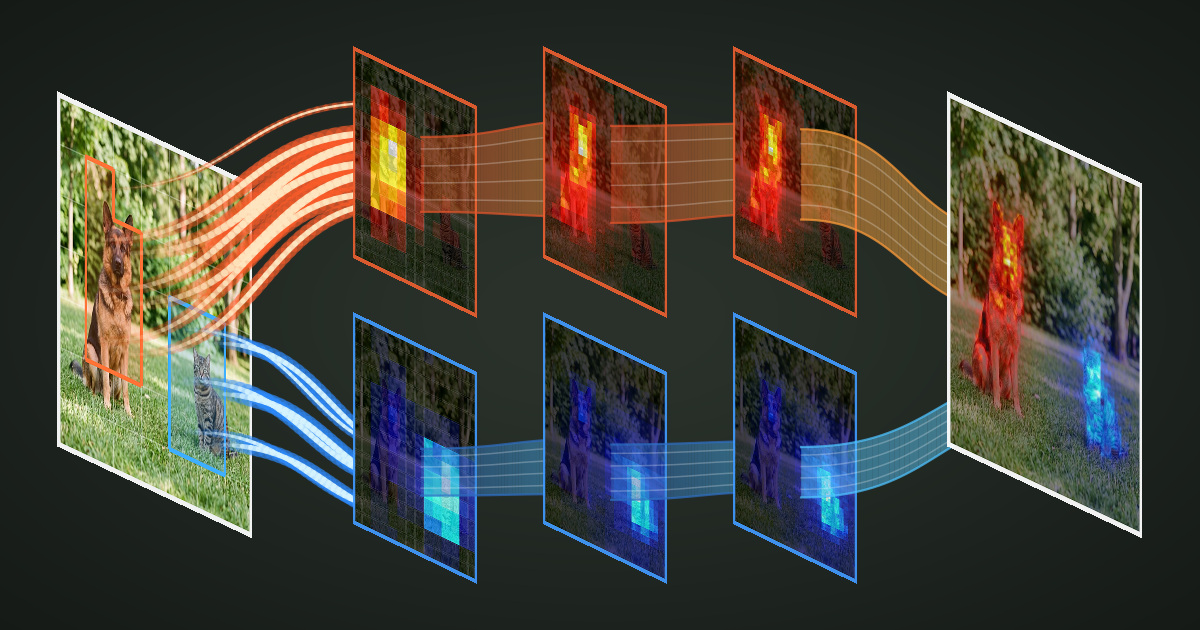
Image classifiers do not always look where we expect. One well-known model recognised horses by a photographer’s copyright tag in the corner of the frame, and only a map of the pixels it relied on revealed the shortcut. Layer-wise relevance propagation (LRP) is a classic way to draw such maps. On modern vision models, however, it can fail without warning, producing either noise or maps that look plausible while carrying the wrong amounts.
-
What Does a Vision Model See Without Labels?
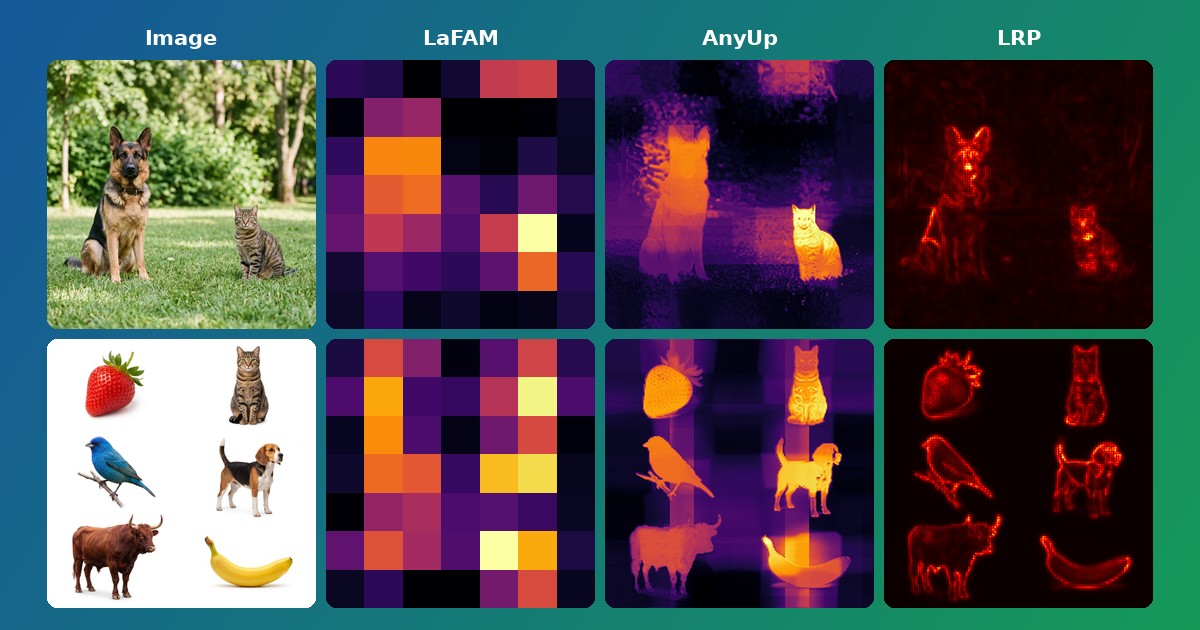
Foundation models trained without explicit labels learn rich representations, yet the same lack of supervision makes them difficult to interpret and validate. Fortunately, both CNNs and Vision Transformers already encode useful clues inside their intermediate features, but visualizing them directly often yields coarse heatmaps. This post explores how to extract and refine these features into sharp spatial maps that can help inspect where the model is actually focusing.
-
Hands-on Guide to Multi-Language Speech Recognition and Speaker diarization
Multi-Language speech recognition and speaker diarization are two important tasks in the field of audio processing. Speech recognition can be defined as the process of converting spoken language into written text, while speaker diarization involves segmenting an audio recording and assigning each segment to a particular speaker. These techniques are used in a variety of applications, including podcasts and conference transcription.
In this blog post, you will learn how to build a pipeline for multi-language speech recognition and speaker diarization using existing libraries.
-
Turning StyleGAN into a latent feature extractor
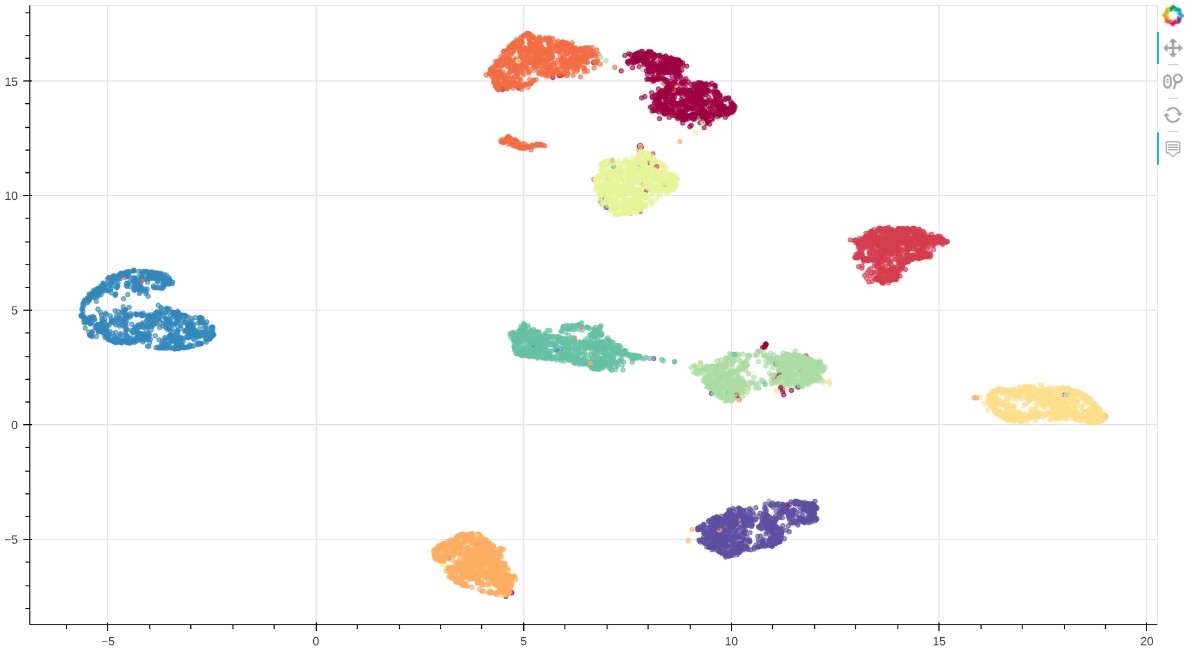
While Generative Adversarial Networks (GANs) are primarily known for their ability to generate high-quality synthetic images, their main task is to learn a latent feature representation of real data. In addition, recent improvements to the original GAN allow it to learn a disentangled latent representation, enabling us to obtain semantically meaningful embeddings.
This property could possibly allow GANs to be used as high-level feature extractors. However, the problem is that the original GAN architecture is not invertible or, in other words, it is impossible to project real images into the latent space.
This article addresses this issue and attempts to answer whether GANs can extract meaningful features from real images and if they are suitable for downstream tasks.
-
Bringing Python to the Web
Have you ever wanted to share your cool Python app with the world without deploying an entire Django server or developing a mobile app just for a small project?
Good news, you don’t have to! All you need is to add one JavaScript library to your HTML page and it will even work on mobile devices, allowing you to mix JS with Python so you can take advantage of both worlds.
subscribe via RSS